Very few sales professionals like role-playing. And very few actually do it. Nor do managers, for that matter. It’s embarrassing, time-consuming, and often feels pointless. After all, your people know what to do, why can’t they just do it?
Why? Because what you don’t practice, you can’t scale.
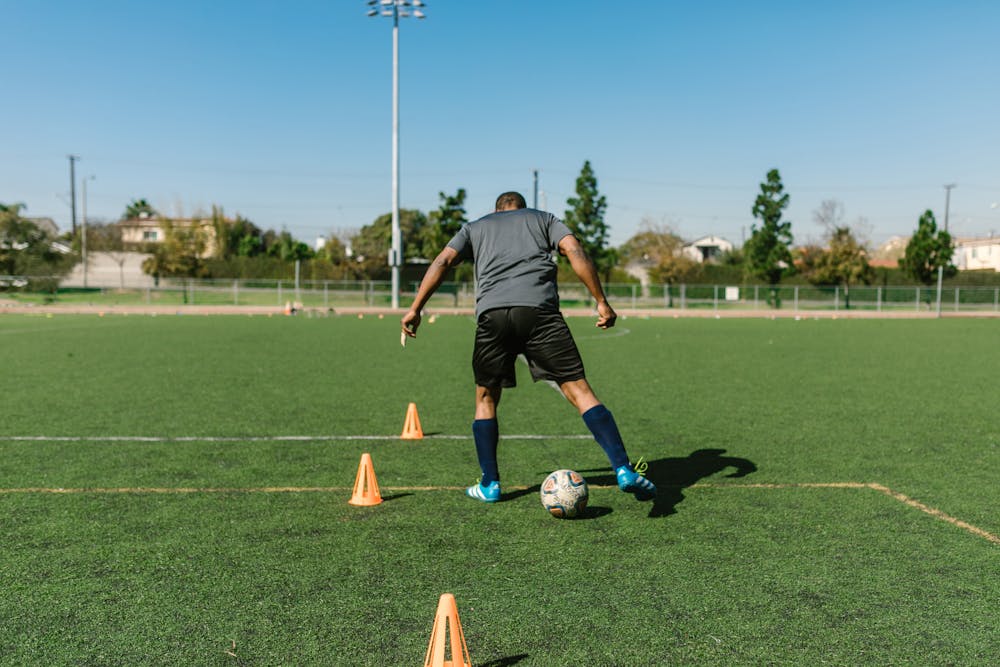
Professionals everywhere, from elite athletes to airline pilots, run drills. Athletes who don’t drill, don’t succeed. Pilots who don’t drill, don’t fly. In complex sales, salespeople who don’t drill, don’t (consistently) win.
On the other hand, regular role playing develops sales teams who do consistently win, consistently improve performance, and consistently outrun the competition. Here’s why… and why AI could be your new role-playing best friend.
Role Play Reinforces Skills and Training
Elite athletes don’t just study skills and practice them once or twice. They practice them over and over and over again. They run drills solo. They run drills with their coach and teammates. They run drills at practice, they run drills before games, they run drills until their bodies know the play inside and out, and know what to do without hesitation.
What you don’t practice, you can’t scale.
Like athletes, a sales professional’s job requires skills, agility, and the ability to respond to quickly changing situations. Role playing is the sales professional’s equivalent of running drills. No one wants to do it. But everyone who does it improves their performance.
It Increases Confidence and Focus
An athlete whose body already knows the moves doesn’t have to focus their attention on the move itself. Instead, they can focus on the environment, on the actions of other players, and on where the ball is on the field. Running drills doesn’t just make them faster and more skilled. It makes them better thinkers.
Likewise, salespeople who role-play regularly learn their skills and approach so thoroughly that they don’t have to think about what to do every moment. They can focus instead on understanding the specific customer, their unique problems and needs, and their situation. They have the brainpower matched with the skills to continuously move the project forward.
Furthermore, customers know when the salesperson feels confident and focused, increasing trust and creating better outcomes.
It Reduces Stress When Things Go Sideways
Athletes who have drilled effectively don’t panic when the ball goes a different direction than they expected. They respond. The same principle applies to military and airline pilots. When you are flying a plane, you need to not only know how to operate it under normal conditions–you need to know what to do when the whole thing goes sideways. Commercial pilots “run plays” in simulators for hundreds of hours before being entrusted with passengers, then hundreds more over the course of their ongoing training.
In a sales situation, the stakes are lower, but the need for practice is just as important. A well-practiced salesperson won’t panic when the customer pops up with an unexpected objection or complication. They’ll stay steady and curious, ready to address the problem and stay on the customer’s side throughout. A salesperson who role plays regularly is a salesperson who can bring a sale in for a safe landing.
It Unleashes the Power of Visualization
Studies have repeatedly shown that athletes who regularly visualize success on the field, are athletes who more often experience success on the field. For example, a basketball player who visualizes themself repeatedly putting the ball through the hoop, is more likely to do so in the middle of a game.
Well-designed role-playing helps a salesperson repeatedly visualize how to navigate an objection, investigate a problem, make contact with important stakeholders, or move a sale forward in a systematic, repeatable way. This visualization transfers to real success, just as it does for athletes.
The Problem Is, Nobody Wants To Do It
It’s all well and good to know that role-playing is a vitally important part of a salesperson’s training and development. It’s another thing entirely to get them to actually do it.
Nobody wants to look silly in front of their colleagues or their coach. No one wants to let someone else see them fumbling the ball repeatedly until they get it right. And, furthermore, no sales manager wants to spend hours running the same plays over and over with each salesperson while juggling all of their other responsibilities.
And the good news is, they don’t have to anymore. This is one of the areas where generative AI brings a substantial, valuable contribution to the table.
Role Playing With AI
A well-designed AI companion can help salespeople run the same plays over and over, without the unpleasant side effect of being seen by another human. The same lack of inhibition with AI that makes it bad at holding people accountable is exactly the same lack of inhibition that makes it a powerful role-playing companion.
To unleash this power, your company needs a well-developed Way of Selling that is repeatable, tested, and reinforced. This creates the structure within which coaches can identify areas for improvement in a salesperson’s skills. Then the AI companion can be trained to play the role of the customer, while the salesperson practices their side of the conversation, as often as they need to in order to feel comfortable, confident, and able to apply their skills.
I’m curious: Is your sales team engaging in role play? What are your favorite and least favorite things about it? Have you started using AI for this function?