Don’t Turn Your Mining Company Into a Mechanic Shop



Imagine that you run a company that mines granite. You have a new quarry, and you’re purchasing a fleet for it. Among other things, you need a truck to remove granite from the quarry after it has been mined.
Historically, you’ve used a certain size truck for this, because it carries a lot of rock at a time and that’s important to you. So you call a few companies that manufacture quarry trucks, and one of them doesn’t offer trucks that large. But before you move on, one of their salespeople says something that convinces you to stay on the phone. And by the time you’re placing a purchase order, that’s the company you’ve chosen.
What changed your mind?
This Is a True Story
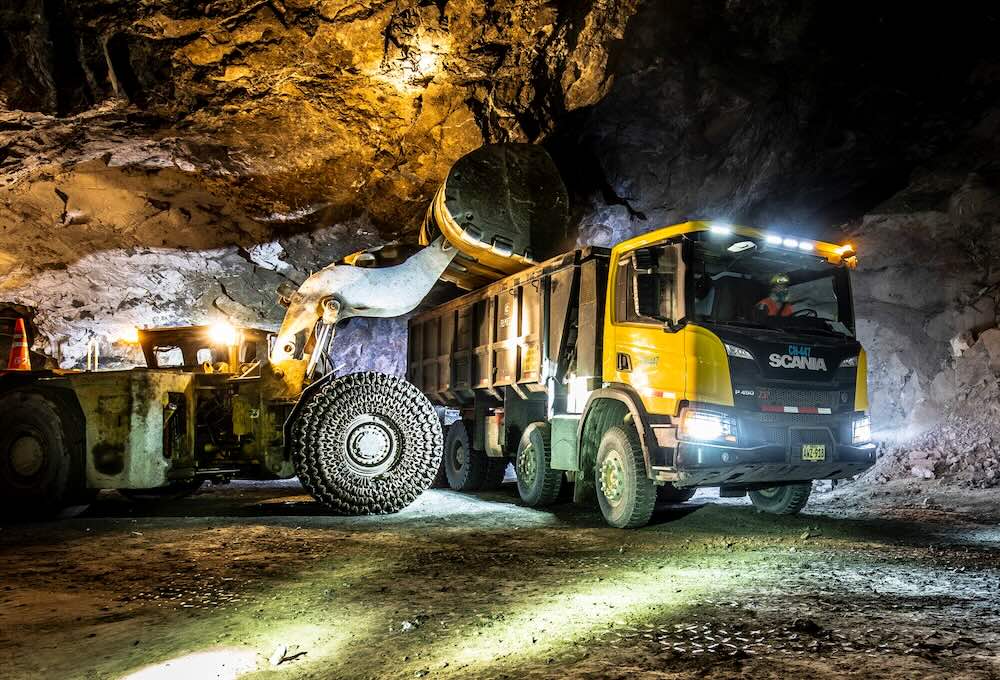
Scania Mining manufactures fleets of small mining trucks, and they routinely talk to buyers who think they need a bigger truck, and, routinely, they convince them otherwise. They do it by zooming out on the bigger picture, identifying the actual problem to be solved, and showing the customer how their smaller trucks are actually a better solution to the real problem.
The problem, in this case, is not that they need trucks. The problem is that they need a consistent, reliable, efficient way to get granite out of the quarry. That’s the zoom-out.
The zoom-in is where they show the client that buying two smaller trucks is more cost-effective and efficient than one larger truck. The smaller trucks are less damaging to the roads in and out of the mine. Having more of them means you can run the mine continuously and don’t have to wait for the larger truck to go back and forth. And, most importantly, when one of the small trucks breaks down, it doesn’t force the whole mine to shut down and turn into a mechanic shop until it’s fixed.
One small truck goes out to the mechanic; one stays home and hauls rock.
This Story Is Not About Trucks
It’s about AI. As I’ve talked about elsewhere, building new applications using Claude is a breeze. I’ve helped my brother build really cool tools for his dental practice. Because of this ease, many sales teams have understandably decided that they can replace all of their sales technology with a custom-built platform that does exactly what they want, nothing more and nothing less.
I’m a fan of software that is exactly what you want, nothing more and nothing less.
The trouble is, building an entire business system on AI is not the same thing as building a single app with AI. In fact, when you zoom out, an AI-built platform is a lot like that large, expensive, clunky, inefficient truck, when you could have an entire fleet of effective little trucks for the same price.
Complexity Grows Exponentially as the Software Grows
Building a simple app to help my brother’s dental practice manage inventory was easy. Building a system to run the entire practice, with all the integrations, updates, new features, and maintenance that come with it, would be a different story. I wouldn’t just be the little brother who built an app anymore. I’d be his systems engineer, his support desk, and his on-call mechanic. Not a job I’d sign up for.
Don’t turn your company into a never-ending software project.
Any team considering its tech stack can fall into the same trap. It’s tempting to think that if building a small tool with AI is easy, replacing the whole stack must be too, and cheaper.
But if you zoom out, you discover that “a cheaper platform” is not the goal. The goal is greater sales effectiveness and the ability to focus on one’s customers. And while it might seem like an AI platform will solve for that as well, that assumption ignores the fact that complexity grows exponentially.
A CRM system has to do a lot more than you think. Beyond the obvious, it talks to your ERP, marketing software, calendar, and email. It has to provide different types of access for different types of users, from frontline salespeople to their managers to the director to HR to the CEO. It needs to do all this seamlessly while remaining flexible and modifiable to meet your dynamic needs. And be in constant compliance with IT security frameworks.
And the fastest, easiest, most reliable way to get that is to start with an application that already does all that… and has the flexibility to incorporate AI-built add-ons to handle the specific integrations and custom workflows you need.
Instead of one big clunky truck of an AI-built platform that grinds the whole operation to a halt every time it blows a tire, you get a solid operation with a fleet of smaller trucks working together. When there’s a problem with an integration, it doesn’t stop the rest of the work. You just patch it up and keep going, knowing that your main platform, the CRM built by people who know software and know sales, will keep hauling rocks.
Like most major technology breakthroughs, AI is an effectiveness modifier. But it’s not a replacement for a solid core system built on human domain knowledge. Don’t turn your company into a never-ending software project.
Start on solid ground. And build from there.

By George Brontén
George is the founder & CEO of Membrain, the Sales Enablement CRM that makes it easy to execute your sales strategy. A life-long entrepreneur with 20 years of experience in the software space and a passion for sales and marketing. With the life motto "Don't settle for mainstream", he is always looking for new ways to achieve improved business results using innovative software, skills, and processes. George is also the author of the book Stop Killing Deals and the host of the Stop Killing Deals webinar and podcast series.
Find out more about George Brontén on LinkedIn