You Can’t Put a Surround System in a House You Don’t Have



Over the past year, my family has experienced significant changes. The kids grew up, their mother and I separated, and very recently it dawned on me that, due of this, I could make another change, too. Remodel my living room to my exact taste.
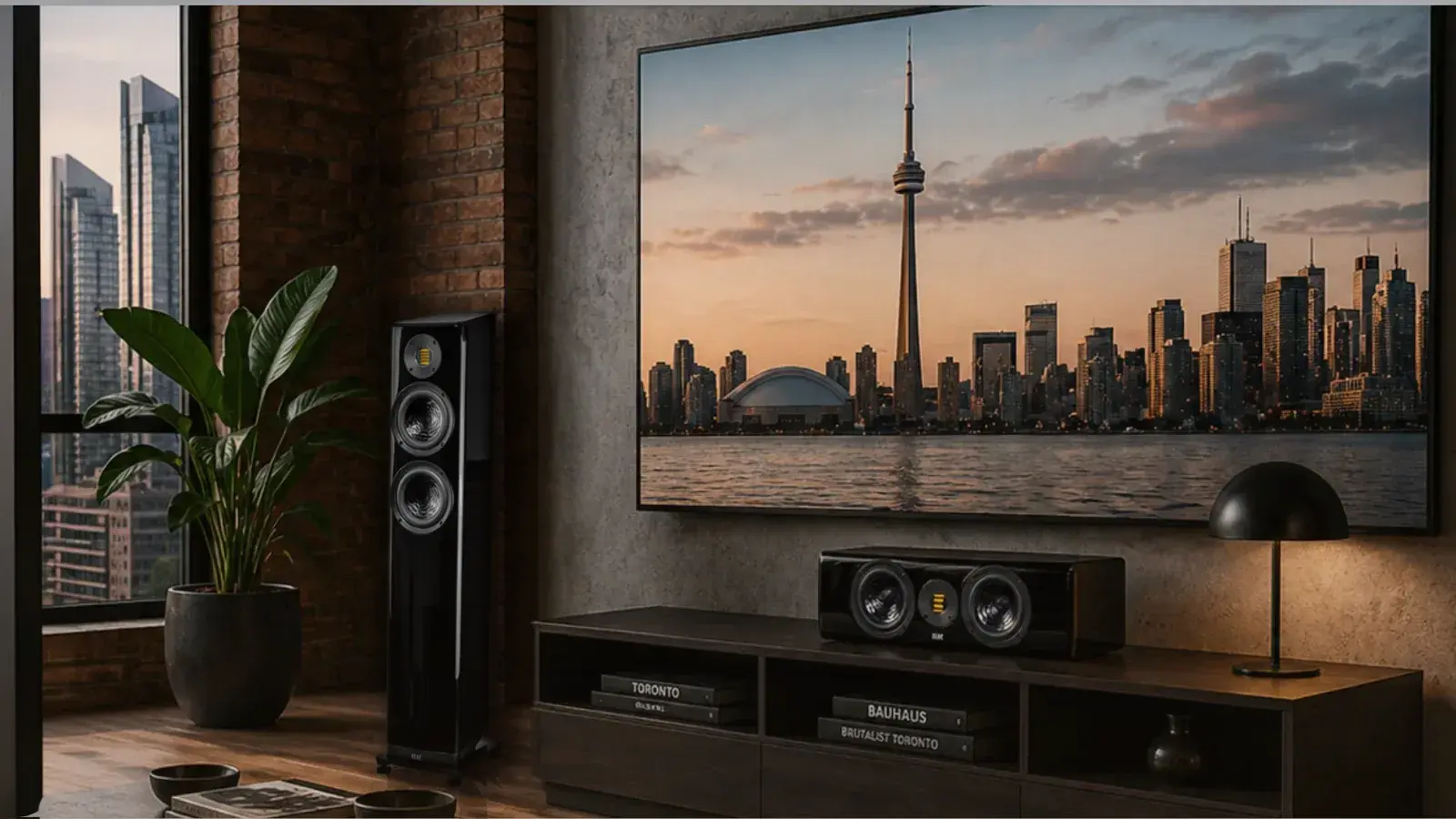
It started with curtains and a rug. Then I remembered the big speakers in a back room and decided to move them into the main living room so I could watch movies with that big sound. Then I realized I didn’t have to stop there. I could bring in a complete surround sound system and turn the room into a comfortable, high-quality home theater.
And as I was doing that, it got me thinking about the way people’s needs and desires change over time, and how what used to work doesn’t always keep working. In life, you get to pivot, update, and remodel based on what your current life looks like. And in business, if you want to survive, you have to do the same. Keep adapting and updating to the environment around you as well as your own evolution as a company.
At a time like the present, it’s easy to see how fast and extreme change can be. Nearly everyone is scrambling to find their footing, either profiting in a big way off AI, losing big time over AI, or scurrying around trying to be one of the winners instead of the losers.
And that got me thinking about the fact that if I’d bought the surround system and didn’t have a house, it would have become a tangle of chaotic, disconnected technology instead of a satisfying home theater experience.
Even With AI, You Need a House
With Claude, it’s possible to program almost anything in a matter of hours, even for non-techies. You can create a custom pricing engine, a call analyzer, or almost any other point solution for almost any idea you might come up with.
A lot of sales teams are doing exactly this. What do they need to pay a CRM company for, when they can just build what they need themselves?
Why? Because structure is still the underpinning to success.
For AI to support of your Way of Selling, it needs access to structured data.
A call recording program, a coaching platform, a win/loss analyzer–these are just pieces of a surround system waiting to be installed in a house. The house is the structure within which the different pieces of equipment operate, and if you don’t have that structure, you may as well be trying to wire up a sound system on a bare lot.
Unless your sales team has a formal Way of Selling that is documented, trained, reinforced, and operationalized, any software you build is just a piece of furniture waiting for a room to fill or an appliance waiting for a wall socket to plug into. Your sales teams are still going to struggle, your customer experience will be uneven, and your ability to adapt and win in this changing environment will be subpar.
Think of your Way of Selling as the architectural plans to your house, and your CRM (if it’s well matched and supports your Way of Selling) as the house. The Way of Selling tells your salespeople what to do, how, and when. The CRM guides them through, reinforcing your company’s structured approach to selling.
Zoom Out to Zoom In
When I began remodeling my living room, I was only thinking about a lamp and some rugs. But when it occurred to me that I no longer had limits on what I could do, because I’m the only person I have to ask, I zoomed out to look at the whole picture. I saw that my ceilings are high and that I needed furnishings to match that scale. I saw that I could completely re-envision how I use the room to match the ways that I actually want to use it.
In the same way, successful sales leaders in this wildly changing environment have an opportunity to zoom out and look at the full picture. To see where they fit in the larger marketplace. To re-envision what kind of structures they need in order to thrive.
This zooming out can enable us to see how our unique Way of Selling works within the larger context, and reorganize it to fit. Then we can zoom back in to ensure all the rooms are functional so we can begin to furnish them cohesively to provide the experience we want our customers to have.
A well-structured Way of Selling becomes the house. Your CRM defines the rooms and layout of the house. And AI can create the equipment, furnishings, appliances, and decor that make your house a home, and your company a place customers come back to over and over again.
Then Bring On the AI
Everyone knows the phrase “garbage in, garbage out.” It’s never been more applicable than it is today. The data sets and training that AI engines consume determine the quality of their output. They’re not magic. They’re “just” highly advanced technologies that predict patterns and generate solutions based on data input and output.
For AI to be truly supportive of your Way of Selling, it needs access to structured data. The kind of structured data you can get out of a system like Membrain, that holds each individual (and AI agent) in your organization accountable to the process, records their data in context, and provides guardrails for how to adapt and respond to each sales opportunity.
The good news in all this is that you don’t have to choose between AI and a packaged platform. You can have the best of both worlds. The structure and flexibility of a platform like Membrain, and the power and freedom of AI. Together with your Way of Selling, they provide exactly what your sales team needs to thrive in this new world.

By George Brontén
George is the founder & CEO of Membrain, the Sales Enablement CRM that makes it easy to execute your sales strategy. A life-long entrepreneur with 20 years of experience in the software space and a passion for sales and marketing. With the life motto "Don't settle for mainstream", he is always looking for new ways to achieve improved business results using innovative software, skills, and processes. George is also the author of the book Stop Killing Deals and the host of the Stop Killing Deals webinar and podcast series.
Find out more about George Brontén on LinkedIn