Popular Content
Membrain for:
Views allow you to shape how information is presented across Membrain so you can focus on what matters in a given moment. Instead of working from a fixed layout, you can adjust filters, structure, and displayed data to match your current task, whether that is reviewing your pipeline, managing activities, or taking a look at the contacts and companies in your CRM.
Views are available across many areas of Membrain, including lists such as Companies, Contacts, and Activities, as well as Prospecting, Sales Projects, Account Growth Projects, Tickets, and Flows.
A View captures how data is presented in a specific context. When you save a view, it remembers your configuration so you can return to it later without needing to rebuild it.
A view can include filters that define which data is shown, as well as sorting and grouping to control how that data is organized. It also includes which fields are visible, along with column order and width in list-based views.
By combining these elements, a single view can represent a very specific perspective on your data. For example, you might create a view that shows upcoming activities grouped by participant, or a list of open sales projects filtered by owner and status while being sorted by closing date and grouped by next step.
Views are most useful when you need to switch between different ways of looking at your data.
For example, you might use one view to focus on your own active opportunities, another to review team-wide performance, and another to analyze upcoming activities. Instead of reconfiguring filters and layout each time, you can save each perspective as a view and switch between them instantly.
By using views effectively, you can stay focused on the right information at the right time and reduce the effort required to manage and analyze your data.
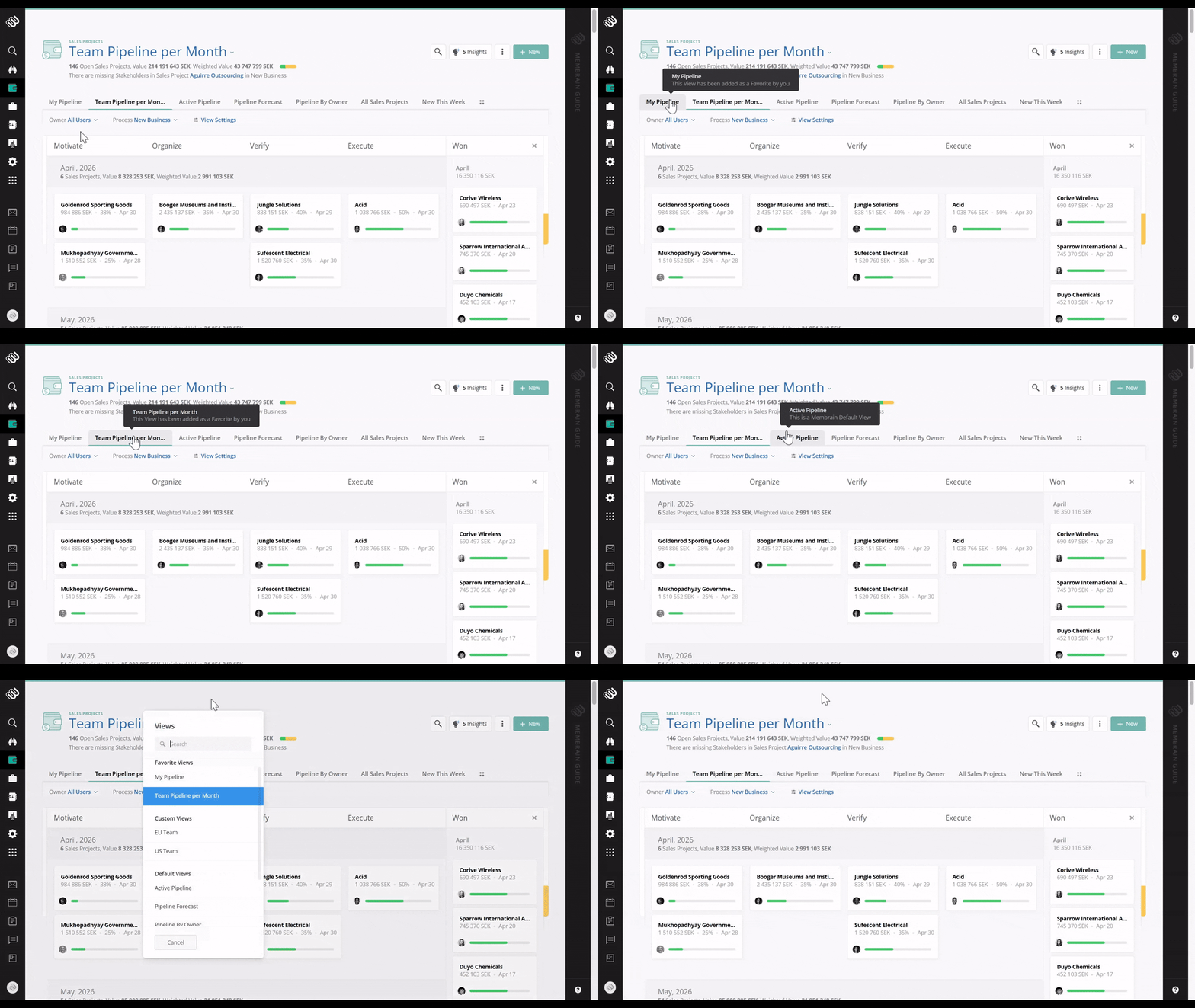
Views can be accessed in two ways depending on how you prefer to work. At the top of the page, tabs provide quick access to your saved views. Tabs include the views you have marked as Favorites, the ones that your admins have set as Pinned and those that exist by default. Hovering over a tab will indicate its type, helping you quickly identify important views.
In addition to Tabs, you can access all available views through the view selector by clicking on the view name. This allows you to switch between views that may not be visible as tabs.
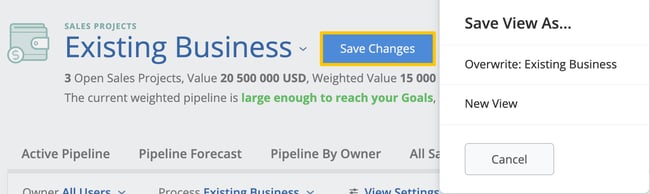
As you adjust a page by applying filters, changing fields, or modifying sorting and grouping, you are shaping a view.
To save your changes, click the Save Changes button. From here, you can choose to create a new view or overwrite the current one.
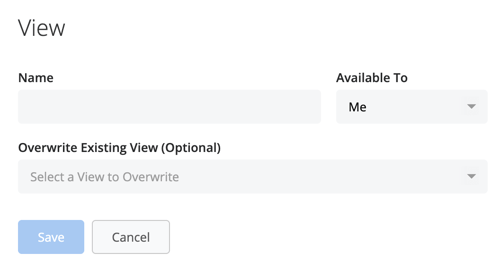
If you create a new view, you will be asked to give it a name and define who can access it. You can change the available to settings to determine who is able to see and/or edit the view. You can specify if this access should be limited to yourself, specific users or teams, or the entire organization.
Saving views allows you to switch between different perspectives quickly, without needing to reconfigure the page each time.
Membrain includes default views to help you get started. These are available to all users and are not editable. You can use them as they are or use them as a starting point when creating your own views. You can toggle default views on or off by clicking the eye icon.
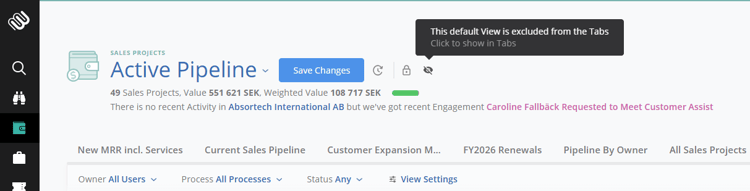
If you have views that you rely on frequently, you can mark them as favorites. Favorite views are easier to access and can appear as tabs for quicker navigation.
This makes it easier to move between your most important perspectives without searching through all available views.
You can update an existing view by making changes and choosing to overwrite it when saving.
To rename a view, change its access settings, or delete it, open the view selector and hover over the view you want to manage. Click the edit icon to access these options.
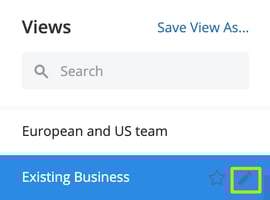
You will only be able to modify a view if you have the appropriate permissions.
Managing access ensures that shared views remain consistent while still allowing flexibility for teams to collaborate.
Views can be shared with others to ensure consistency across your team.
From the three-dot menu, you can generate a shareable link to a view. This allows colleagues to access the same configuration quickly.
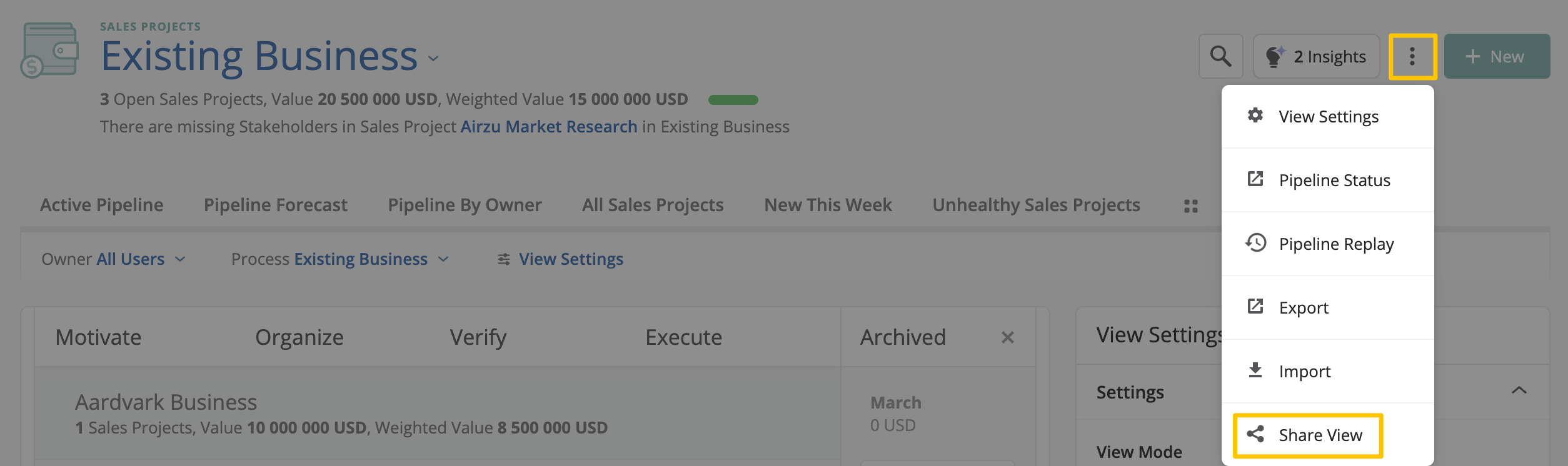
Access to a shared view depends on permissions. If a user does not have access, they will not be able to open the view.
Sharing is useful when aligning teams around the same data perspective, such as pipeline reviews or activity tracking.
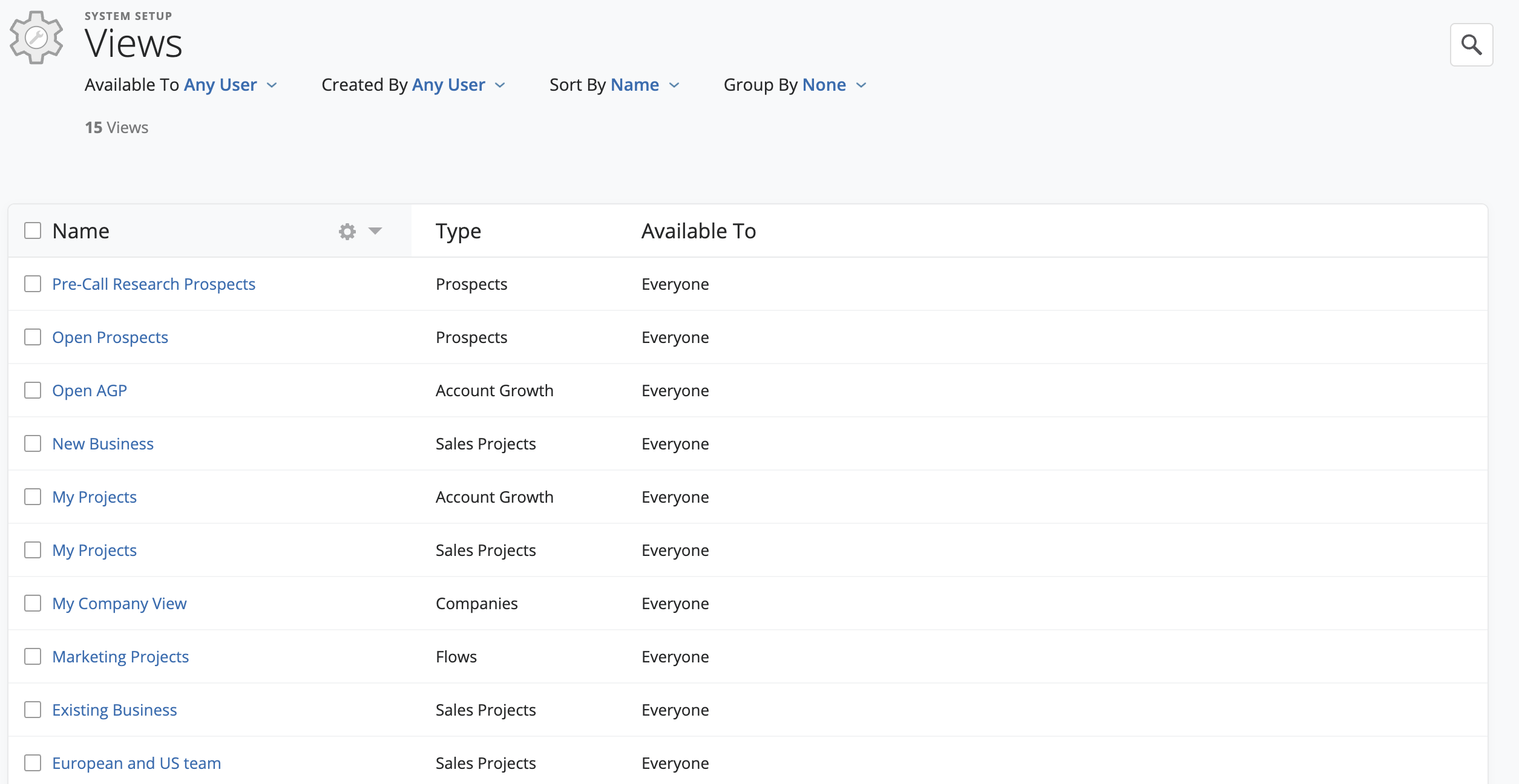
Administrators can manage all views from a central location in the Views page in System Setup.
From here, it is possible to review all saved views, sort them based on different criteria, and make updates in bulk. This includes changing access permissions or removing views that are no longer needed.